Hotels in the Algarve

50 places to stay

Between Sagres and the Guadiana river there are three Algarves that have little to do with one another. In the west, the Vicentine coast faces the Atlantic head-on, with waves, wind and cold water. On the south coast of the Barlavento, the western Algarve, ochre cliffs, caves and small beaches between rocks rule. In the east, in the Sotavento, the Ria Formosa separates the mainland from low islands of sand, with calmer sea and towns that live from fishing and salt pans. Behind it all, the barrocal (the limestone foothills) and the hills hold white villages, cork oaks, strawberry trees and trails where in summer you hardly meet anyone. Choosing the right part matters more than choosing the beach: it decides the kind of sea, the rhythm of your days and the time you spend in the car.

1–12 of 50

Manu House
Holiday homes

Manu House

Lagos · Lagos, Sagres and the west coast

100 m² holiday home in Lagos with two bedrooms, a fully equipped kitchen, garden, terrace and free Wi-Fi, about 1 km from the city walls and the first beaches.

10.0Exceptional· 35See prices
Your Vintage Townhouse
Holiday homes

Your Vintage Townhouse

Lagos · Lagos, Sagres and the west coast

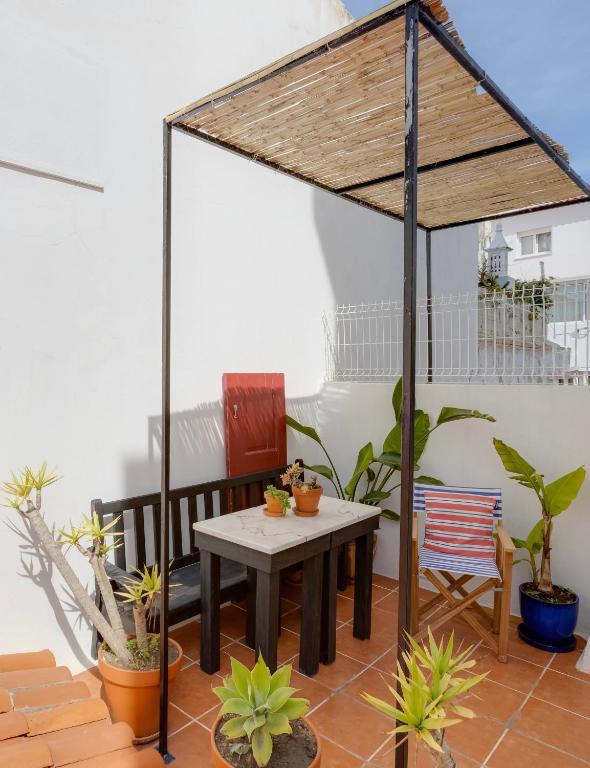
Holiday home with balcony and terrace in the centre of Lagos, with equipped kitchen, air conditioning and free Wi-Fi, near the city walls and the beaches of central Lagos.

9.9Exceptional· 128See prices
My Friendly House
Holiday homes

My Friendly House

Lagos · Lagos, Sagres and the west coast

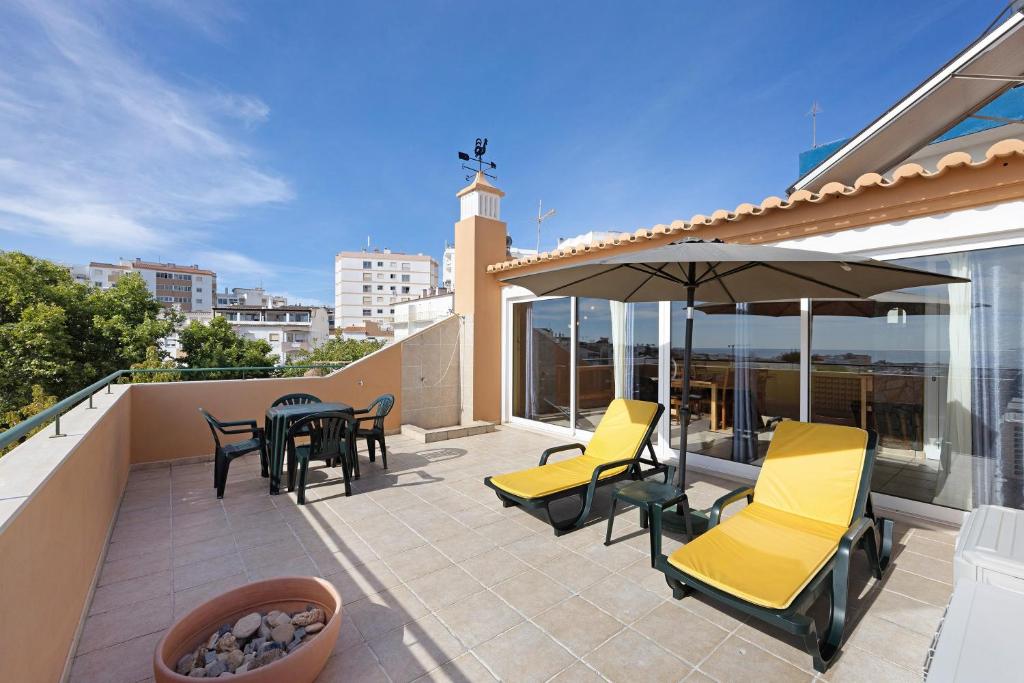
Entire holiday home in Lagos with four bedrooms, terrace, balcony and sea view, close to the marina, the old town and the city's beaches.

9.9Exceptional· 48See prices
Sunset Guesthouse - Costa Vicentina
Guesthouses

Sunset Guesthouse - Costa Vicentina

Aljezur · Lagos, Sagres and the west coast

Guest house in Aljezur, next to the castle, with continental breakfast, shared kitchen, free Wi-Fi and air-conditioned rooms for exploring the Costa Vicentina.

9.8Exceptional· 321See prices
Casa Malìa Luxury Guest House
Bed and breakfasts

Casa Malìa Luxury Guest House

Praia da Luz · Lagos, Sagres and the west coast

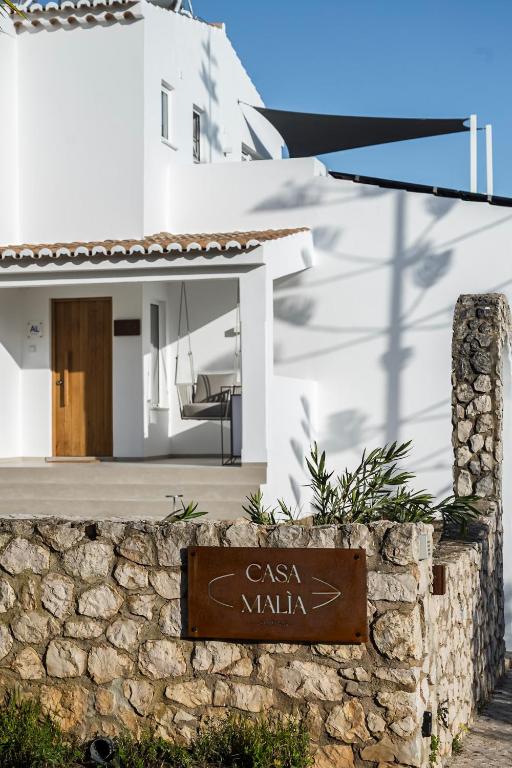
Bed and breakfast on Praia da Luz with an outdoor saltwater pool, garden, terrace and rooms with balcony, some with sea view.

9.8Exceptional· 296See prices
Romantik Villa
Guesthouses

Romantik Villa

Salema · Lagos, Sagres and the west coast

Guest house in Salema, adults only, with an outdoor saltwater pool, garden and suites with terrace and kitchenette, less than 1 km from the beach.

9.8Exceptional· 281See prices
Herdade Quinta Natura Turismo Rural
Bed and breakfasts

Herdade Quinta Natura Turismo Rural

Aljezur · Lagos, Sagres and the west coast

Bed and breakfast in Aljezur, on a 7.7-hectare property on the Costa Vicentina, with suites that have private terraces, an outdoor pool and homemade breakfast.

9.8Exceptional· 281See prices
Palm View Guesthouse, adults only
Bed and breakfasts

Palm View Guesthouse, adults only

Praia da Luz · Lagos, Sagres and the west coast

Adults-only bed and breakfast on Praia da Luz, with outdoor pool, garden, terrace and rooms with air conditioning and private bathroom.

9.8Exceptional· 158See prices
Casa Sousa
Holiday homes

Casa Sousa

Lagos · Lagos, Sagres and the west coast

Holiday home with pool, garden and terrace in Lagos, with four bedrooms, a fully equipped kitchen and Porto de Mós and Dona Ana beaches less than 1 km away.

9.8Exceptional· 56See prices
Casa Sol e Sal
Bed and breakfasts

Casa Sol e Sal

Praia da Luz · Lagos, Sagres and the west coast

Accommodation in Praia da Luz, with buffet breakfast, air-conditioned rooms, a terrace and free parking, 1.8 km from the main beach.

9.8Exceptional· 53See prices
Moinho Calmo
Bed and breakfasts

Moinho Calmo

Vila do Bispo · Lagos, Sagres and the west coast

Bed and breakfast in Vila do Bispo, with garden, terrace and bar, rooms with private bathroom and beaches on the Costa Vicentina a few kilometres away.

9.7Exceptional· 357See prices

Areas in the Algarve

Guide: Algarve

Barlavento, Sotavento or the west coast: which part to choose

The south coast of the Barlavento, from Lagos to Albufeira, is the Algarve of the photographs: jagged cliffs, sea stacks, caves you can only see from the water and beaches tucked into the rock that you reach by steps or ramps. Carvoeiro, Ferragudo and Benagil live off this coast; Portimão and Albufeira have the big hotels and the nightlife. Expect small beaches, which fill early in July and August, and difficult parking near the best-known ones. To see this coast from above, the Seven Hanging Valleys Trail links Marinha beach to Vale de Centeanes beach, in Lagoa: about 6 kilometres one way along the clifftop, without shade, best done early or in the late afternoon.

At the western end, Lagos is the most complete base: historic centre, train station, boats to Ponta da Piedade and beaches you can walk to. Beyond Lagos the coast quietens down as far as Sagres and Cape St Vincent, and then turns north. The area of Lagos, Sagres and the west coast combines the two coasts and suits those who want to alternate cliffs and calm sea with the open Atlantic in the same week, as long as they accept driving.

The west coast, from Sagres to Odeceixe, belongs to the Southwest Alentejo and Vicentine Coast Natural Park and has almost no building by the sea. Arrifana, Amado, Bordeira and Monte Clérigo are surf beaches, long and open, with strong wind on summer afternoons and water that rarely warms up. It is the right side for walkers, surfers and anyone looking for silence; with small children it calls for extra attention to currents and flags.

The Sotavento, from Faro to Vila Real de Santo António, is flatter and has a different rhythm. The beaches are on barrier islands, which you reach by boat or over wooden bridges, and the sands are enormous, with a sea that is generally calmer and warmer than in the west. Tavira is a good base for a week, Olhão is the choice for anyone who likes a market and fish, and Cacela Velha is a viewpoint over the lagoon.

Ria Formosa, barrocal and hills: the Algarve away from the beach towel

The Ria Formosa stretches for about 60 kilometres, from the Ancão peninsula to Manta Rota, protected by the islands of Barreta (also called Ilha Deserta), Culatra, Armona and Tavira. Ferries leave from Faro, Olhão and Tavira; on Culatra and Armona there are fishing settlements with low houses and fish restaurants, while Barreta is almost all dunes and sand. In the salt pans of Olhão, Tavira and Castro Marim you can see flamingos and wading birds, especially in winter.

Between the coast and the hills lies the barrocal, a band of limestone with carob, almond and fig trees and villages such as Alte, Salir and Querença. Loulé has one of the liveliest municipal markets in the region, Estoi has the Roman ruins of Milreu and a pink palace, and Silves has the red sandstone castle of the former capital of Islamic Algarve.

The Monchique hills, in the west, are the highest and greenest: Fóia reaches 902 metres and, on clear days, lets you see Cape St Vincent. In the east, the Caldeirão hills are drier and less populated, with schist farmsteads and strawberry-tree groves. The Via Algarviana (GR13) crosses both over more than 300 kilometres, in 14 stages, from Alcoutim, on the Guadiana, to Cape St Vincent; it is best walked between February and April and in autumn, because in summer there is little shade.

When to go and when to avoid

From the second half of July to the end of August the Algarve fills up: small beaches with no space from mid-morning, queues on the EN125 (the old coastal main road), restaurants with waiting lists and prices at their peak. If you can only go then, you gain by choosing your spot well: the islands of the Ria Formosa and the big beaches of the Sotavento absorb people better, the west coast still has room and Monchique cools down at the end of the day.

June and September are the best months for the beach: long days, a sea that is already or still pleasant and far fewer people. May and October suit those who mix walking and swimming. From November to March the Algarve is different: green fields, almond blossom in the barrocal from the end of January and trails in the best condition; on the other hand, some restaurants and accommodation are closed, especially on the west coast and in the villages.

Water temperature varies more than you might think. With a north wind, cold deep water rises along the western coast and the westernmost Barlavento, and Luz or Sagres can have the sea several degrees colder than Faro or Tavira on the same day. At the Benagil caves, the rules in force since August 2024 forbid swimming in and landing on the sand of the cave, and kayak trips must be made with a guide.

Getting there and getting around

Faro Airport is a few kilometres from the city but has no rail link: you reach the centre and Faro station by bus or taxi. From Lisbon, the Alfa Pendular and Intercidades trains run to Faro and stop at Tunes, where you change to the regional train if you are going to Silves, Portimão or Lagos.

The Algarve Line links Lagos with Vila Real de Santo António and, since July 2026, is served by electric trains that run between Lagos and Vila Real de Santo António without a change at Faro. It is useful for getting around between Lagos, Portimão, Faro, Olhão and Tavira, but several stations are far from the town centre, as in Albufeira or Loulé, and none serves the west coast or the hills.

The A22, the Via do Infante motorway, runs from Bensafrim, at the edge of Lagos, to the Guadiana bridge and stopped charging tolls on 1 January 2025. The EN125, parallel and closer to the coast, goes through towns and roundabouts and is slow in summer; it suits short journeys. For the Vicentine coast, Monchique or the barrocal, a car is practically essential, and from Sagres to Vila Real de Santo António you should allow about two hours.

Frequently asked questions about Algarve

Which part of the Algarve is best for a holiday with small children?

The islands and beaches of the Sotavento are the easiest: fine sand, gradual entry into the sea and small waves on most days, with the lagoon alongside for even calmer paddling. In the Barlavento there are sheltered coves, but many have long staircases and tides that shrink the beach. The west coast is for days when the sea is still, always near a lifeguarded beach.

Is it worth going to the Algarve in August or is it better to wait for September?

September wins on almost everything: the sea keeps the warmth built up over the summer, there is less traffic and the beaches have space again. August is worth it mainly for those who have no other time or who look for village festivals and nightlife. In that case, booking early, getting to the beach first thing in the morning and saving the hottest afternoons for the islands or the shade of the hills helps a great deal.

Can you see the Algarve without a car?

Partly. With the train and regional buses you can do a good route between Lagos, Portimão, Faro, Olhão and Tavira, with boats to the islands and beaches you can walk to from the centre. Almost everything far from the line is left out: Sagres, the Vicentine coast, Monchique and the barrocal villages, where buses are few and designed for people who live there.

How many days do you need to see the Barlavento and the Sotavento?

A week is enough for two bases: three or four nights in the Barlavento, among cliffs and caves, and the same in the Sotavento, among islands and Tavira. Trying to see everything from a midway point, such as Albufeira, means spending too much time on the road. On a long weekend, it is best to choose one side and get to know it without hurrying.

Where can you find beaches with fewer people in high summer?

Away from the big car parks. On the islands of the Ria Formosa you only need to walk a kilometre along the sand from the jetty to find space; on the west coast, beaches such as Bordeira or Amoreira are so wide that they never really fill. In the Barlavento, the coves you reach by trail or by kayak, early, are the alternative to the staircase beaches that are crowded by late morning.